
On recreating the lost SDK for a 42-year-old operating system: VisiCorp VisiOn

I would think most of us here at OSNews are aware of VisiOn, the graphical multitasking operating system for the IBM PC which was one of the first operating systems with a graphical user interface, predating Windows, GEM, the Mac, and even the Apple Lisa. While VisiOn was technically an “open” platform anybody could develop an application for, the operating system’s SDK cost $7000 at the time and required a VAX system. This, combined with VisiOn failing in the market, means nobody knows how to develop an application for it.

Until now. Over the past few months, Nina Kalinina painstakingly unraveled VisiOn so that she she could recreate the SDK from scratch. In turn, this allowed developer Atsuko to develop a clean-room application for VisiOn – which is most likely the very first third-party application ever developed and released for VisiOn. I’ve been following along with the pains Kalinina had to go through for this endeavour over on Fedi, and it sure was a wild ride few would be willing (and capable) to undertake.

It took me a month of working 1-2 hours a day to produce a specification that allowed Atsuko to implement a clean-room homebrew application for VisiOn that is capable of bitmap display, menus and mouse handling.

If you’re wondering what it felt like: this project is the largest “Sudoku puzzle” I have ever tried to solve. In this note, I have tried to explain the process of solving this puzzle, as well as noteworthy things about VisiOn and its internals.

↫ Nina Kalinina

The article contains both a detailed look at VisiOn, as well as the full process of recreating its SDK and developing an application with it. Near the end of the article, after going over all the work that was required to get here, there’s a sobering clarification:

This reverse-engineering project ended up being much bigger than I anticipated. We have a working application, yes, but so far I’ve documented less than 10% of all the VisiHost and VisiOp calls. We still don’t know how to implement keyboard input, or how to work with timers and background processes (if it is possible).

↫ Nina Kalinina

I’d love for more people to be interested in helping this effort out, as it’s not just an extremely difficult challenge, but also a massive contribution to software preservation. VisiOn may not be more than a small footnote in computing history, but it still deserves to be remembered and understood, and Kalinina and Atsuko have done an amazing amount of legwork for whomever wants to pick this up, too.
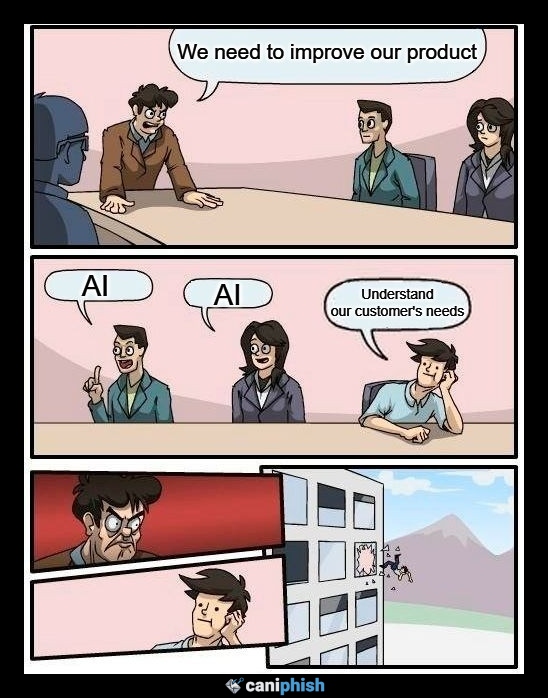
Google is experimentally replacing news headlines with AI clickbait nonsense

Did you know that BG3 players exploit children? Are you aware that Qi2 slows older Pixels? If we wrote those misleading headlines, readers would rip us a new one — but Google is experimentally beginning to replace the original headlines on stories it serves with AI nonsense like that.

↫ Sean Hollister at The Verge

I’m a little teapot, short and stout. Here is my handle, here is my spout. When I get all steamed up, hear me shout. Tip me over and pour me out!

Micron is ending its consumer RAM business because of “AI”

You may have noticed that due to “AI” companies buying up all literally all the RAM in the world, prices for consumer RAM and SSDs have gone completely batshit insane. Well, it’s only going to get worse, since Micron has announced it’s going to exit the market for consumer RAM and is, therefore, retiring its Crucial brand. The reason?

You know the reason.

“The AI-driven growth in the data center has led to a surge in demand for memory and storage. Micron has made the difficult decision to exit the Crucial consumer business in order to improve supply and support for our larger, strategic customers in faster-growing segments,” said Sumit Sadana, EVP and Chief Business Officer at Micron Technology.

↫ Micron’s press release

First it was the crypto pyramid scheme, and now it’s the “AI” pyramid scheme. These MLMs for unimpressive white males who couldn’t imagine themselves out of a wet paper bag are ruining not just the environment, software, and soon the world’s economy when the bubble pops, but are now also making it extraordinarily expensive to buy some RAM or a bit of storage. Literally nothing good is coming from these techbro equivalents of Harlequin romance novels, and yet, we’re forced to pretend they’re the next coming of the railroads every time some guy who was voted most likely to die a middle manager at Albertsons in Casper, Wyoming, farts his idea out on a napkin.

I am so tired.

Redox takes first baby steps towards a modesetting driver for Intel graphics

An exciting tidbit of news from Redox, the Rust-based operating system. Its founder and lead developer Jeremy Soller has merged the first changes for a modesetting driver for Intel graphics.

After a few nights of reading through thousands of pages of PRMs I have finally implemented a modesetting driver for Intel HD graphics on Redox OS. There is much more to do, but there is now a clear path to native hardware accelerated graphics!

↫ Jeremy Soller

Of course, all the usual disclaimers apply, but it’s an important first step, and once again underlines that Redox is turning into a very solid platform that might just be on the cusp of becoming something we can use every day.

MacOS: losing confidence

It’s always a bit sad and a little awkward when reality starts hitting long-time fans and users of an operating system, isn’t it? I feel like I’m at least fifteen years ahead of everyone else when it comes to macOS, at least.

Over the last few weeks I’ve been discovering problems that have been eroding confidence in macOS. From text files that simply won’t show up in Spotlight search, to Clock timers that are blank and don’t function, there’s one common feature: macOS encounters an error or fault, but doesn’t report that to the user, instead just burying it deep in the log.

When you can spare the time, the next step is to contact Apple Support, who seem equally puzzled. You’re eventually advised to reinstall macOS or, in the worst case, to wipe a fairly new Apple silicon Mac and restore it in DFU mode, but have no reason to believe that will stop the problem from recurring. You know that Apple Support doesn’t understand what’s going wrong, and despite the involvement of support engineers, they seem as perplexed as you.

↫ Howard Oakley

I remember when Mac OS X was so far ahead of the competition it was honestly a little tragic. Around the late PowerPC and very early Intel days, when the iPhone hadn’t yet had the impact on the company it has now, the Mac and its operating system were the star of the company’s show, and you felt it when you used it. Even though the late PowerPC hardware was being outpaced left, right, and centre by Intel and AMD hardware in virtually every sense, Mac OS X more than made up for it being being a carefully and lovingly crafted operating system designed and developed by people who clearly deeply cared.

I used nothing but Macs as a result.

These days, everything’s reversed. By all accounts, Macs are doing amazing hardware-wise, with efficient, powerful processors and solid design. The operating system, however, has become a complete and utter mess, showing us that no, merely having great hardware does not make up for shit software in the same way the reverse was true two decades ago. I’d rather use a slower, hotter laptop with great software than a faster, cooler laptop with terrible software.

I’m not sure we’re going to see this trend reversed any time soon. Apple, too, is chasing the dragon, and everything the company does is designed around their cash cow, and I just don’t see how that’s going to change without a complete overhaul of the company’s leadership.

Why is running Linux on a RiscPC so hard?

What if you have a Risc PC, but aside from RISC OS, you also want to run Linux? Well, then you have to jump through a lot of hoops, especially in 2025.

Well, this was a mess. I don’t know why Potato is so crashy when I install it. I don’t know why the busybox binary in the Woody initrd is so broken. But I’ve got it installed, and now I can do circa-2004 UNIX things with a machine from 1994.

↫ Jonathan Pallant

The journey is definitely the most rewarding experience here for us readers, but I’m fairly sure Pallant is just happy to have a working Linux installation on his Risc PC and wants to mostly forget about that journey. Still, reading about the Risc PC is very welcome, since it’s one of those platforms you just don’t hear about very often between everyone talking about classic Macs and Commodore 64s all the time.

A vector graphics workstation from the 70s

OK I promised computers, so let’s move to the Tek 4051 I got! Released in 1975, this was based on the 4010 series of terminals, but with a Motorola 6800 computer inside. This machine ran, like so many at the time, BASIC, but with extra subroutines for drawing and manipulating vector graphics. 8KB RAM was standard, but up to 32KB RAM could be installed. Extra software was installed via ROM modules in the back, for example to add DSP routines. Data could be saved on tape, and via RS232 and GBIP external devices could be attached!

All in all, a pretty capable machine, especially in 1975. BASIC computers where getting common, but graphics was pretty new. According to Tektronix the 4051 was ideal for researches, analysts and physicians, and this could be yours for the low low price of 6 grand, or around $36.000 in 2025. I could not find sales figures, but it seems that this was a decently successful machine. Tektronix also made the 4052, with a faster CPU, and the 4054, a 19″ 4K resolution behemoth! Tektronix continued making workstations until the 90s but like almost all workstations of the era, x86/Linux eventually took over the entire workstation market.

↫ Rik te Winkel at Just another electronics blog

Now that’s a retro computer you don’t see very often.

FreeBSD 15.0 released with pkgbase

The FreeBSD team has released FreeBSD 15.0, and with it come several major changes, one of which you will surely want to know more about if you’re a FreeBSD user. Since this change will eventually drastically change the way you use FreeBSD, we should get right into it.

Up until now, a full, system-wide update for FreeBSD – as in, updating both the base operating system as well as any packages you have installed on top of it – would use two separate tools: freebsd-update and the pkg package manager. You used the former to update the base operating system, which was installed as file sets, and the latter to update everything you had installed on top of it in the form of packages.

With FreeBSD 15.0, this is starting to change. Instead of using two separate tools, in 15.0 you can opt to deprecate freebsd-update and file sets, and rely entirely on pkg for updating both the base operating system as well as any packages you have installed, because with this new method, the base system moves from file sets to packages. When installing FreeBSD 15.0, the installer will ask you to choose between the old method, or the new pkg-only method.

Packages (pkgbase / New Method): The base system is installed as a set of packages from the “FreeBSD-base” repository. Systems installed this way are managed entirely using the pkg(8) tool. This method is used by default for all VM images and images published in public clouds. In FreeBSD 15.0, pkgbase is offered as a technology preview, but it is expected to become the standard method for managing base system installations and upgrades in future releases.

↫ FreeBSD 15.0 release announcement

As the release announcement notes, the net method is optional in FreeBSD 15 and will remain optional during the entire 15.x release cycle, but the plan is to deprecate freebsd-update and file sets entirely in FreeBSD 16.0. If you have an existing installation you wish to convert to using pkgbase, there’s a tool called pkgbasify to do just that. It’s sponsored by the FreeBSD Foundation, so it’s not some random script.

Of course, there’s way more in this release than just pkgbase. Of note is that the 32bit platforms i386, armv6, and 32-bit powerpc have been retired, but of course, 32bit code will continue to run on their 64bit counterparts. FreeBSD 15.0 also brings a native inotify implementation, a ton of improvements to the audio components, improved Intel Wi-Fi drivers, and so, so much more.

Windows drive letters are not limited to A-Z

On its own, the title of this post is just a true piece of trivia, verifiable with the built-in subst tool (among other methods).

Here’s an example creating the drive +:\ as an alias for a directory at C:\foo:

[…]

The +:\ drive then works as normal (at least in cmd.exe, this will be discussed more later):

[…]

However, understanding why it’s true elucidates a lot about how Windows works under the hood, and turns up a few curious behaviors.

↫ Ryan Liptak

Fascinating doesn’t even begin to describe this article, but at the same time, it also makes me wonder at what point maintaining this drive letter charade becomes too burdensome, clunky, and complex. Internally, Windows NT does not use drive letters at all, but for the sake of backwards compatibility and to give the user what they expect, a whole set of abstractions has been crafted to create the illusion that modern versions of Windows still use the same basic drive letter conventions as DOS did 40 years ago.

I wonder if we’ll ever reach a point where Windows no longer uses drive letters, or if it’s possible today to somehow remove or disable these abstractions entirely, and run Windows NT without drive letters, as Cutler surely intended. Vast swaths of Windows programs would surely curl up in fetal position and die, including many core components of the operating system itself – as this article demonstrates, very few parts of Windows can handle even something as mundane as a drive letter outside of A-Z – but it’d make for a great experiment.

Someone with just the right set of Windows NT skills must’ve tried something like this at some point, either publicly or inside of Microsoft.

Migrating Dillo away from GitHub

What do you do if you develop a lightweight browser that doesn’t support JavaScript, but you once chose GitHub as the home for your code? You’re now in the unenviable position that your own browser can no longer access your own online source repository because it requires JavaScript, which is both annoying and, well, a little awkward. The solution is, of course, obvious: you move somewhere else.

That’s exactly what the Dillo browser did. They set up a small VPS, opted for cgit as the git frontend for its performance and small size, and for the bug tracker, they created a brand new, very simple bug tracker.

To avoid this problem, I created my own bug tracker software, buggy, which is a very simple C tool that parses plain Markdown files and creates a single HTML page for each bug. All bugs are stored in a git repository and a git hook regenerates the bug pages and the index on each new commit. As it is simply plain text, I can edit the bugs locally and only push them to the remote when I have Internet back, so it works nice offline. Also, as the output is just an static HTML site, I don’t need to worry about having any vulnerabilities in my code, as it will only run at build time.

↫ Rodrigo Arias Mallo

There’s more considerations detailed in the article about Dillo’s migration, and it can serve as inspiration for anyone else running a small open source project who wishes to leave GitHub behind. With GitHub’s continuing to add more and more complexity and “AI” to separate open source code from its licensing terms, we may see more and more projects giving GitHub the finger.

Landlock-ing Linux

Landlock is a Linux API that lets applications explicitly declare which resources they are allowed to access. Its philosophy is similar to OpenBSD’s unveil() and (less so) pledge(): programs can make a contract with the kernel stating, “I only need these files or resources — deny me everything else if I’m compromised.”

It provides a simple, developer-friendly way to add defense-in-depth to applications. Compared to traditional Linux security mechanisms, Landlock is vastly easier to understand and integrate.

This post is meant to be an accessible introduction, and hopefully persuade you to give Landlock a try.

↫ prizrak.me blog

I had no idea this existed, even though it seems to plug a hole in the security and sandboxing landscape on Linux by not requiring any privileges and by being relatively simple and straightforward to use. There’s even an additional “supervisor” proposal that would bring Android-like permissions not just to, say, desktop applications (see Flatpak), but to every process trying to access anything for the first time.

I’m not knowledgeable enough to make any statements about Landlock compared to any other options we have for securing desktop Linux in a user-friendly, non-intrusive manner, but I definitely like its simplicity.

System 7 natively boots on the Mac Mini G4

Only a few weeks ago, the CHRP variants of Mac OS 7.6 and 8 were discovered and uploaded to the internet for posterity, but we’re already seeing the positive results of this event unfold: Mac OS 7.x can now run on the Mac Mini G4 – natively.

The very short of it is as follows. First, the CHRP release of Mac OS 8 contains a ROM file that allows Mac OS 8 to boot on the G4 Mac Mini. Second, the CHRP release of 7.6 contains a System Enabler that allows 7.6 earlier versions to run by using the aforementioned ROM file. Third, the ROM has been modified to add compatibility with as many Mac models as possible. There’s a lot more to it, of course, but the end result is that quite a few more older, pre-9.x versions of Mac OS can now run on G4 and G3 Macs, which is quite cool.

Of course, there are limitations.

Note that, although I describe many of these as “stable”, I mean you can use much of it normally (sound/video/networking aside) without it crashing or misbehaving, at least not too hard, but that is not to say everything works, because that is just not the case. For example, when present, avoid opening the Apple System Profiler, unless you want a massive crash as it struggles trying to profile and gather all the information about your system. Some other apps or Control Panels might either not work, or work up to a certain point, after which they might freeze, requiring you to Force Quit the Finder to keep on going. And so on.

↫ Jubadub at Mac OS 9 Lives

Issues or no, this is amazing news, and great work by all involved.

Genode OS Framework 25.11 released

The release 25.11 wraps up our year of “rigidity, clarity, performance” with a bouquet of vast under-the-hood improvements. Genode’s custom kernel received special tuning of its new CPU scheduler for Sculpt-OS workloads, and became much more scalable with respect to virtual-memory management. Combined, those efforts visibly boost the performance of Sculpt OS on performance-starved hardware like the PinePhone or the i.MX8-based MNT Reform laptop. On account of improving clarity, our new configuration format – now named human-inclined data (HID) – proliferates throughout Genode’s tooling. We are also happy to report that almost all Genode components have become interoperable with both XML and HID by now.

↫ Genode OS Framework 25.11 release notes

The Genode Framework 25.11 also brings a major change to how important shared components that aren’t strictly part of the framework are handled, such as ports like libSDL, sqlite, or gnutls. Before, these could only be built with the Genode build system, which was suboptimal because this isn’t designed for building individual components. Several changes have been made to now enable the use of multiple build systems and the Goa SDK, which should make it a lot easier to these crucial components to become the responsibility of wider parts of the community.

There’s way more, of course, such as the usual driver improvements, including the addition of support for serial-to-USB adapters.

Dell: about 1 billion PCs will not or cannot be upgraded to Windows 11

During a Dell earnings call, the company mentioned some staggering numbers regarding the amount of PCs that will not or cannot be upgraded to Windows 11.

“We have about 500 million of them capable of running Windows 11 that haven’t been upgraded,” said Dell COO Jeffrey Clarke on a Q3 earnings call earlier this week, referring to the overall PC market, not just Dell’s slice of machines. “And we have another 500 million that are four years old that can’t run Windows 11.” He sees this as an opportunity to guide customers towards the latest Windows 11 machines and AI PCs, but warns that the PC market is going to be relatively flat next year.

↫ Tom Warren at The Verge

The monumental scale of the Windows 10 install base that simply won’t or cannot upgrade to Windows 11 is massive, and it’s absolutely bonkers to me that we’re mostly just letting them get away with leaving at least a billion users out in the cold when it comes to security updates and bug fixes. The US government (in better times) and the EU should’ve 100% forced Microsoft’s hand, as leaving this many people on outdated, unsupported operating system installations is several disasters waiting to happen.

Aside from the dangerous position Microsoft is forcing its Windows 10 users into, there’s also the massive environmental and public health impact of huge swaths of machines, especially in enterprise environments, becoming obsolete overnight. Many of these will end up in landfills, often shipped to third-world countries so we in the west don’t have to deal with our e-waste and its dangerous consequences directly. I can get fined for littering – rightfully so – but when a company like Microsoft makes sweeping decisions which cause untold amounts of dangerous chemicals to be dumped in countless locations all over the globe, governments shrug it off and move on.

At least we will get some cheap eBay hardware out of it, I guess.

CDE 2.5.3 released

So my love for the Common Desktop Environment isn’t exactly a secret, so let’s talk about the project’s latest release, CDE 2.5.3, released a few days ago. As the version number suggests, this first new version in two years is a rather minor release, containing only a few bug fixes. For instance, CDE’s window manager dtwm picked up support for more mouse buttons, its file manager dtfile now uses sh to find files instead of ksh, and a few more of these rather minor, but welcome, changes and bugfixes.

Ever since CDE was released as open source over thirteen years ago, and while considerable work has been done to make it build, install, and run on modern platforms, that’s kind of where the steam ran out. CDE isn’t being actively developed to build upon its strengths and add new and welcome features and conveniences, but is instead kept in a sort of buildable stasis. There is absolutely nothing wrong with this – it keeps CDE accessible on modern platforms, and that’s a huge amount of work that deserves respect and gratitude – but it’d be nice if we lived in a world where there was enough interest (and time and money) to have people work on actually improving it.

Of course, the reality is that there’d be very little interest in such an improved CDE, and that’s exactly why it isn’t happening. On top op the current work the CDE team is doing, you’d need to not only develop new features, but also improve the Motif toolkit to make such new features possible, and make sure such improvements don’t break anything else. With such an old codebase, that can’t possible be an easy task.

Still, I will continue to daydream of a slightly more modernised CDE with some additional niceties we’ve come to expect over the past 30 years, even if I know full well it’s futile.

Moss: a Linux-compatible kernel written in Rust

Moss is a Unix-like, Linux-compatible kernel written in Rust and Aarch64 assembly.

It features a modern, asynchronous core, a modular architecture abstraction layer, and binary compatibility with Linux userspace applications (currently capable of running most BusyBox commands).

↫ Moss’ GitHub page

I mean, hobby operating systems and kernels written in Rust aren’t exactly the most unique right now, but that doesn’t make them any less interesting for the kinds of people that frequent a site called OSNews. Moss has quite a few things going for it, including support for enough Linux system calls to run most BusyBox commands, complex memory and process management, use of Rust’s async/await model in the kernel, and much more.

I work for an evil company, but outside work, I’m actually a really good person

I love my job. I make a great salary, there’s a clear path to promotion, and a never-ending supply of cold brew in the office. And even though my job requires me to commit sociopathic acts of evil that directly contribute to making the world a measurably worse place from Monday through Friday, five days a week, from morning to night, outside work, I’m actually a really good person.

↫ Emily Bressler at McSweeney’s

The tech industry is full of people like this.

KDE to drop X11 session in KDE Plasma 6.8

The KDE project has made the call.

Well folks, it’s the beginning of a new era: after nearly three decades of KDE desktop environments running on X11, the future KDE Plasma 6.8 release will be Wayland-exclusive! Support for X11 applications will be fully entrusted to Xwayland, and the Plasma X11 session will no longer be included.

↫ The Plasma Team

They’re following in the footsteps of the GNOME project, who will also be leaving the legacy windowing system behind. What this means in practice is that official KDE X11 support will cease once KDE Plasma 6.7 is no longer supported, which should be somewhere early 2027. Do note that the KDE developers intend to release a few extra bugfix releases in the 6.7 release cycle to stabilise the X11 session as much as possible for those people who are going to stick with KDE Plasma 6.7 to keep X11 around.

For people who wish to keep using X11 after that point, the KDE project advises them to switch to LTS distributions like Alma Linux, which intend to keep supporting Plasma X11 until 2032. Xwayland will handle virtually all X11 applications running inside the Wayland session, including X11 forwarding, with similar functionality implemented in Wayland through Waypipe. Also note that this only applies to Plasma as a whole; KDE applications will continue to support X11 when run in other desktop environments or on other platforms.

As for platforms other than Linux – FreeBSD already has relatively robust Wayland support, so if you intend to run KDE on FreeBSD in the near future, you’ll have to move over to Wayland there, as well. The other BSD variants are also dabbling with Wayland support, so it won’t be long before they, too, will be able to run the KDE Plasma Wayland session without any issues.

What this means is that the two desktop environments that probably make up like 95% of the desktop Linux user base will now be focusing exclusively on Wayland, which is great news. X11 is a legacy platform and aside from retrocomputing and artisanal, boutique setups, you simply shouldn’t be using it anymore. Less popular desktop environments like Xfce, Cinnamon, Budgie, and LXQt are also adding Wayland support, so it won’t be much longer before virtually no new desktop Linux installations will be using X11.

One X down, one more to go.

Microsoft will start preloading Explorer because it’s so slow

With all the problems Windows is facing, I think one area where Microsoft can make some easy, quick gains is by drastically improving Explorer, Windows’ file manager. It seems that in the latest developer releases, they’re doing just that. The most impactful change – possibly – is that Microsoft is going to preload Explorer.

We’re exploring preloading File Explorer in the background to help improve File Explorer launch performance. This shouldn’t be visible to you, outside of File Explorer hopefully launching faster when you need to use it. If you have the change, if needed there is an option you can uncheck to disable this called “Enable window preloading for faster launch times” in File Explorer’s Folder Options, under View.

↫ Windows Insider Program Team

Microsoft is also reordering the context menu in Explorer, and while this may seem like a small set of changes, the new context menu does look much tidier and less busy. They achieve this by moving a few top-level items to a submenu, and reordering some other elements. Sadly, the context menu still retains its own context menu (“Show more options”), which is a traditional Win32 menu – which I still think is one of the most Windows of Windows things of all time.

Regardless, I hope these small changes make Explorer more bearable to use for those of you still using Windows, because we all know you need it.

Google’s Android for desktops and laptops is called “Aluminium

Google has made it very clear that it’s intending to bring Android to laptops and desktops, and replace Chrome OS with Android in the process. We now have a codename, and some more information about what this will look like in practice.

Over the weekend, a tipster on Telegram named Frost Core shared a link to an intriguing Google job listing for a ‘Senior Product Manager, Android, Laptop and Tablets.’ While we already know Google is bringing Android to the PC, the listing explicitly states that the role involves ‘working on a new Aluminium, Android-based, operating system.’ This effectively confirms that Aluminium is the codename for the new unified platform. The name appears to be a nod to the project’s roots: like Chromium (the open-source version of ChromeOS), Aluminium is a metal ending in ‘-ium.’ The choice of the British spelling — emphasizing the ‘Al’ prefix — likely pays homage to Android serving as the project’s foundation.”

↫ Mishaal Rahman at Android Authority

So we have the codename, and of course, what we also have is a strong focus on “AI”, which will be “at the core” of desktop Android. Further details uncovered in job openings include a focus not just on entry-level hardware, but also midrange and premium laptops and desktops, as well as Chrome OS being replaced by this new desktop Android variant. I somehow doubt existing Chrome OS devices will be updated to this new desktop Android variant, so Chrome OS will continue to exist as a product for at least quite a few years to come.

I still have a considerable amount of doubt that Google would be able to pull this off in a successful way. It’s already hard enough to get anyone to buy any laptop that isn’t running Windows or macOS, and I doubt the Android operating system has the kind of pull with consumers to make them consider switching to it on their laptops or desktops. Enthusiasts will surely eat it up – if only to try – but without any clear, massive success, this desktop Android thing runs the real risk of ending up at Google’s graveyard.

These Android laptops can be incredible products, but even if they are, I just won’t trust Google to remain interested in it.